Contact us: 7208019100
Top HR Job Interview Questions: The only Guide yo will ever need
Preparing for HR job interview questions is one of those things that separates candidates who walk out relieved from those who spend the ride home replaying every stumbled answer. This guide covers the real questions — not recycled filler — and gives you human, memorable ways to answer them.
Sitting across from an HR professional is a different kind of pressure than facing a technical panel. The questions feel deceptively simple — “Tell me about yourself” or “Where do you see yourself in five years?” — but each one is a layered probe into how you think, how you communicate, and whether you actually want this job or just any job. When it comes to HR job interview questions and answers, the difference between a good response and a great one is rarely about saying something smarter. It is almost always about saying something more honest, more specific, and better connected to what the company actually needs.
This guide is not a list of rehearsed scripts to memorise. Interviewers can smell a memorised script from the first sentence — the slightly too-smooth cadence, the suspiciously perfect story arc. What you need is a deep understanding of why each question exists and what kind of answer actually satisfies it. Once you have that, your own genuine experience becomes your best material.
Why HR Interviews Are Different From Every Other Round
Most people prepare extensively for technical interviews and then treat the HR round like a formality. That is a mistake. The HR interview is often the gate between you and every other round. The person asking the questions is specifically trained to identify candidates who will fit culturally, stay long enough to justify hiring costs, and represent the company well. They are not evaluating your technical competence — they are evaluating your self-awareness.
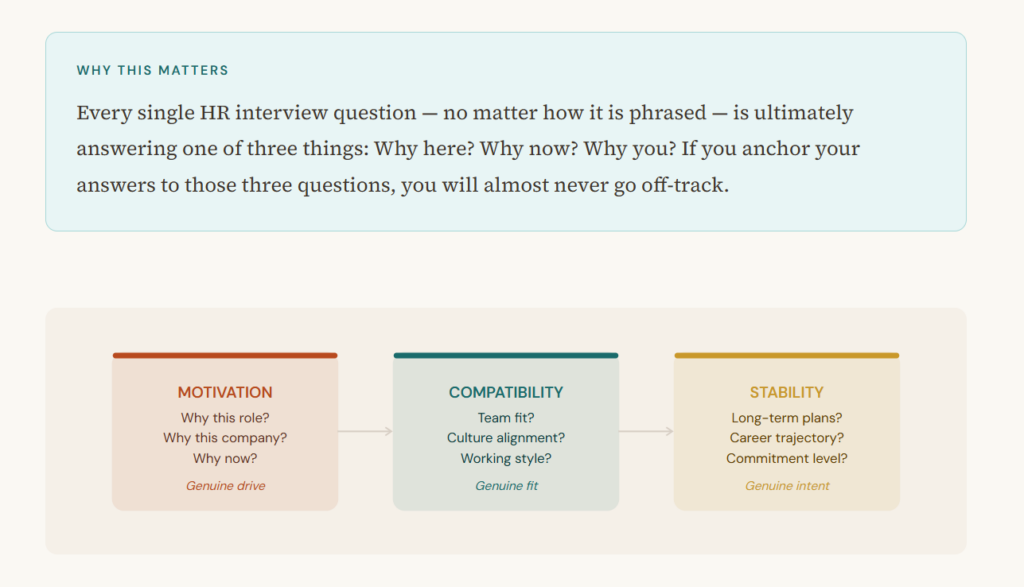
HR job interview questions tend to cluster around three core concerns. First, motivation — do you genuinely want this role, or is it a fallback? Second, compatibility — will you mesh with the team, the manager, and the company’s pace? Third, stability — are you likely to leave in eight months, causing the organisation to start this expensive hiring process again?
The 12 Most Common HR Job Interview Questions (and What They Actually Mean)
Below are the most frequently asked HR job interview questions and answers you are likely to encounter, along with the reasoning behind each one. Understanding the intent is more useful than memorising sample answers — because your actual experience will always be more compelling than a borrowed one.
1. Tell me about yourself.
This is the most asked of all HR job interview questions, and it consistently trips people up because it sounds open-ended when it is actually a very focused request. The interviewer is not asking for your life story. They want a tight two-minute narrative that connects your background to this role, right now.
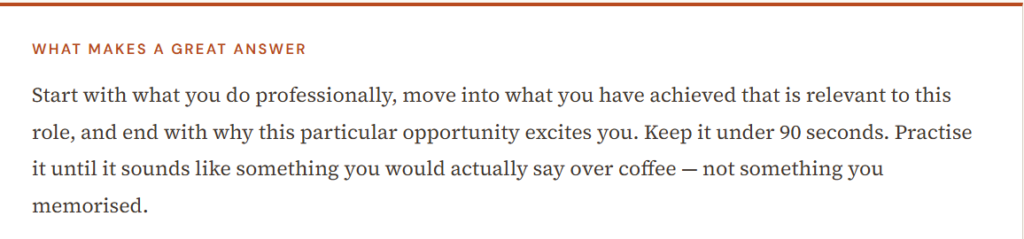
2. Why do you want to work here?
This is one of the most important HR job interview questions and one of the most poorly answered. Generic responses like “You have a great culture” or “I love the brand” signal that you have done surface-level research at best. The interviewer wants evidence that you understand what makes the company distinctive — and that you specifically want that thing.

Popular post
-
How to Apply for Bank Jobs After 12th: 10 Powerful Tips to Start Your Career Early
-
How to Get Job in BPO – Ultimate Power Guide for Freshers in 2025
-
How to Apply for Bank Jobs After Graduation – Powerful 2025 Career Guide
-
Can a BSc Graduate Work in a Bank? Exploring Career Opportunities in Banking for BSc Graduates
-
Top 10 High-Paying Jobs in Mumbai for 12th Pass Candidates
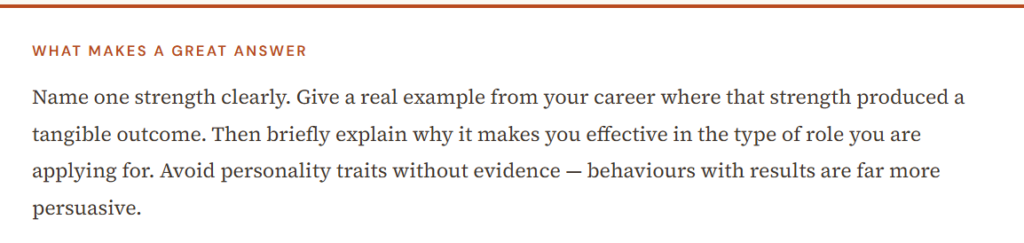
3. What is your greatest strength?
Among the classic HR job interview questions and answers, this one has a particular trap. People either go too humble (“I work too hard, I guess”) or too broad (“I am a great communicator”). Neither works. Strengths need to be specific, believable, and relevant.
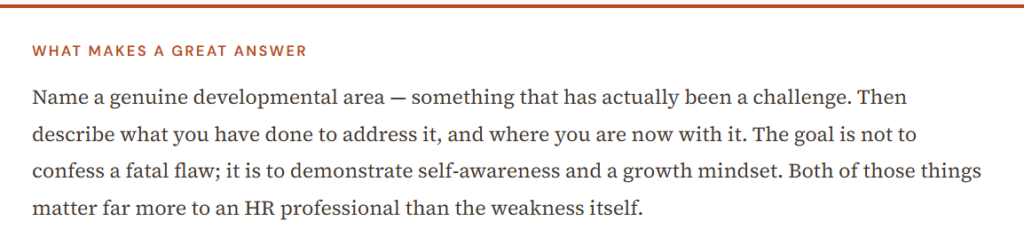
4. What is your greatest weakness?
One of the most notorious HR job interview questions. The old advice about naming a “weakness that is secretly a strength” has become so widely known that it now signals inauthenticity immediately. Interviewers have heard “I am a perfectionist” ten thousand times.
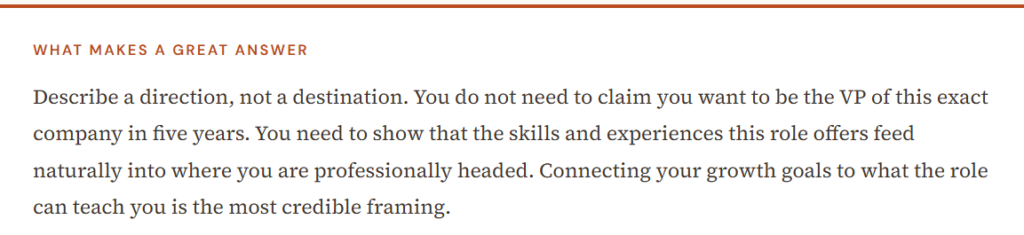
5. Where do you see yourself in five years?
This is a stability question dressed up as a career-planning question. When HR professionals ask this particular question in HR job interview questions and answers sessions, they are trying to understand whether this role fits logically into your career arc — or whether you will leave the moment something flashier appears.
6. Why are you leaving your current role?
This is one of the trickiest HR job interview questions because it carries emotional weight. Whatever your real reason — a toxic manager, burnout, stagnation, being passed over — there is a version of it you can tell that is truthful and professional simultaneously.
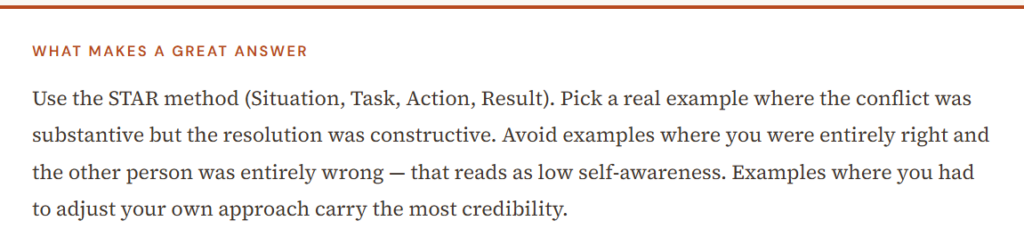
7. Tell me about a time you faced a conflict at work.
A classic behavioural entry in any list of HR job interview questions and answers. This is designed to surface how you handle interpersonal friction — whether you avoid it, escalate it, or navigate it with some degree of professionalism.
More Essential HR Interview Questions
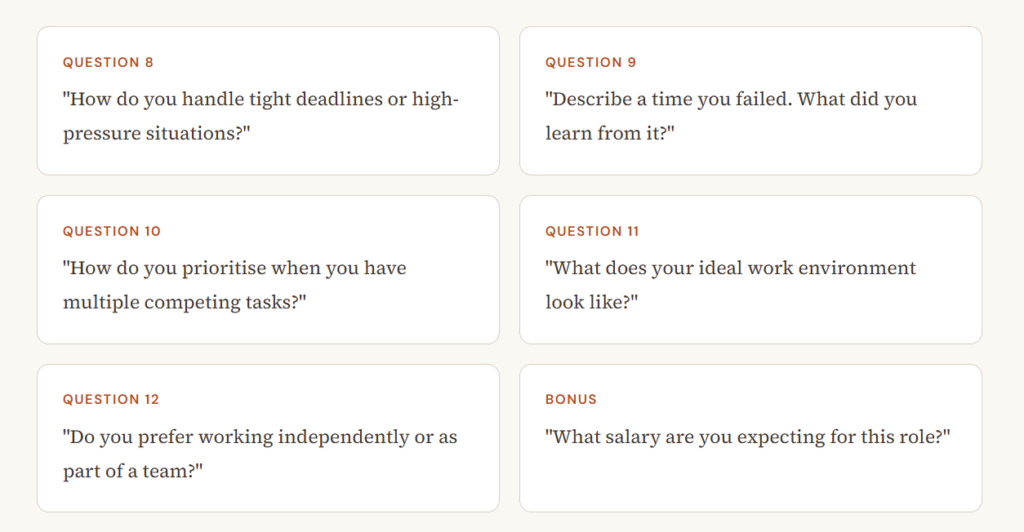
For each of these HR job interview questions, the golden principle remains the same: answer with a specific example, name the actual outcome, and close with what it tells you about yourself as a professional. Generalities are forgettable. Specificity is sticky.
The STAR Method: Your Framework for Behavioural Interview Questions
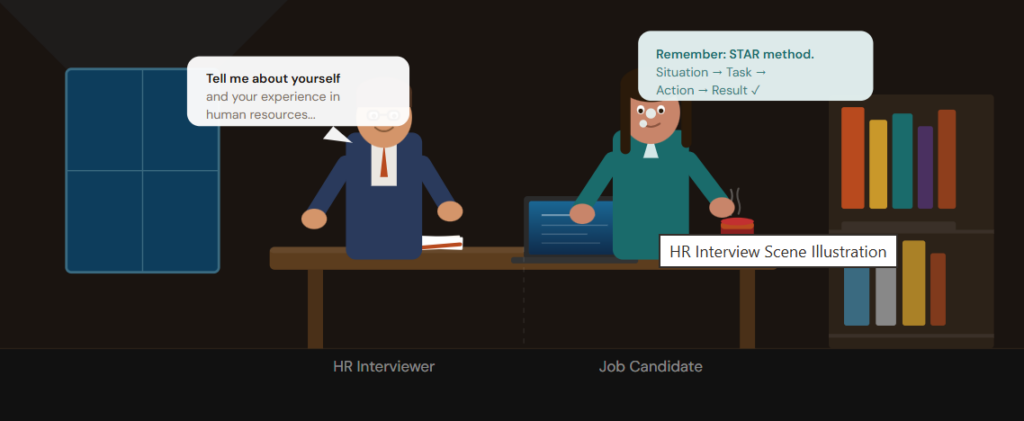
Almost every behavioural entry in the universe of HR job interview questions and answers can be answered well using the STAR framework. It gives your answer structure without making it sound like a formula — as long as you are not mechanically announcing each letter as you go.
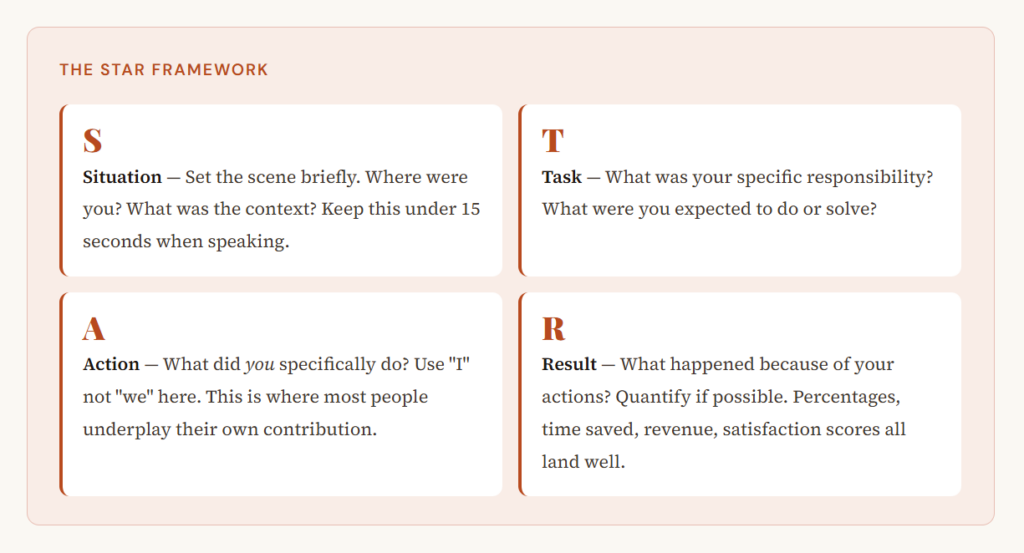
The most common failure in STAR answers is spending too long on S and T, then rushing through A and R. The interviewer already understands that workplaces have situations and tasks. What they need to hear is what you did and what changed because of it. Shift the weight of your answer towards Action and Result.

For each of these HR job interview questions, the golden principle remains the same: answer with a specific example, name the actual outcome, and close with what it tells you about yourself as a professional. Generalities are forgettable. Specificity is sticky.
Preparing Answers Before the Interview: A Step-by-Step System
Most candidates know they should prepare for HR job interview questions. Far fewer have a system that actually turns preparation time into confidence. Here is one that works.
- Build a story bank. Before any interview, write down 8 to 10 specific professional situations from your career — challenges, achievements, failures, collaborations, and changes. Each one should be vivid, concrete, and connected to a real outcome. This bank becomes your material for almost any behavioural HR job interview question you encounter.
- Map stories to question types. Go through a standard list of HR job interview questions and answers and tag each story in your bank to the questions it could answer. One good story can serve multiple questions with slight shifts in emphasis.
- Research until you find something genuinely interesting. Not just “I read your website.” Dig into recent news about the company, read their sustainability reports, look at what their employees say on review platforms. Find something that makes you think, “Huh, I actually want to talk about this.” That energy is palpable in an interview.
- Practise out loud. Not in your head — out loud. Recording yourself on your phone is uncomfortable but invaluable. You will immediately hear where your answer rambles, where you trail off, and where the pace drops. Fix those before the interview.
- Prepare your own questions. The end of every HR interview involves “Do you have any questions for us?” This is not a formality. It is another signal. Ask about the team dynamic, the biggest challenge the successful candidate will face in the first 90 days, or what success looks like in this role after one year. These questions show you have thought past the offer.
For each of these HR job interview questions, the golden principle remains the same: answer with a specific example, name the actual outcome, and close with what it tells you about yourself as a professional. Generalities are forgettable. Specificity is sticky.
What HR Professionals Are Actually Looking For
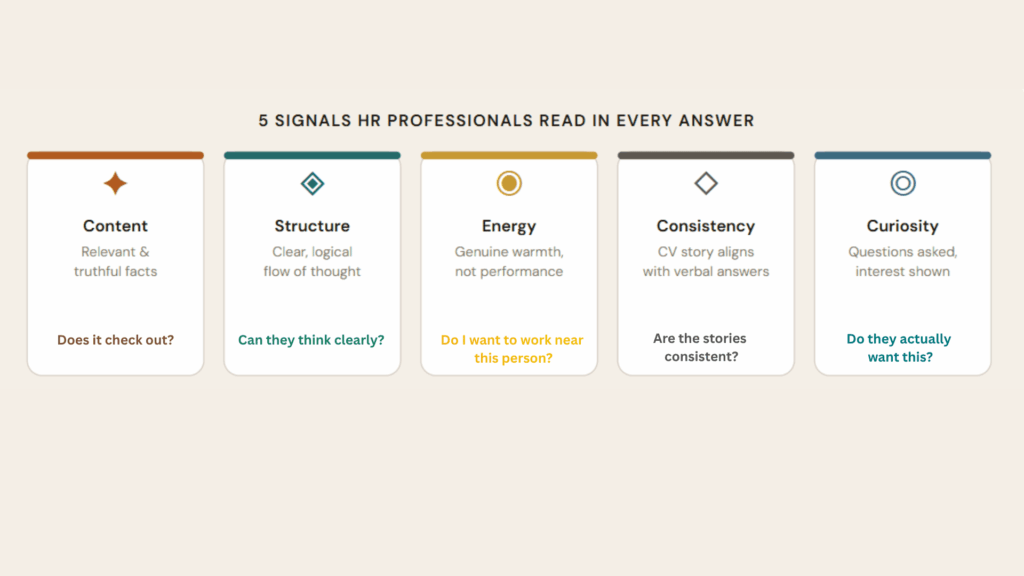
Understanding these five signals reframes how you approach every HR job interview question. You are not just answering — you are communicating across five channels simultaneously. Candidates who nail the content but show flat energy still fall short. Candidates whose CV story does not match what they say get flagged immediately. The best answers satisfy all five channels at once.
Salary Questions: The One HR Interview Question Most People Dread
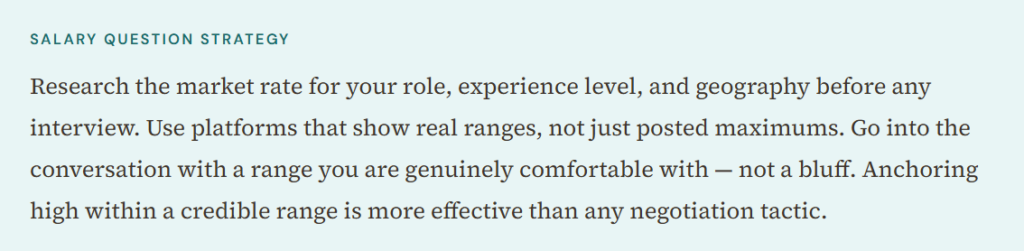
Of all the HR job interview questions and answers scenarios, the salary discussion creates the most anxiety. Candidates worry about naming too high and losing the opportunity, or too low and leaving money on the table. The anxiety is understandable — it is genuinely a negotiation, and neither party wants to tip their hand too early.
The practical reality is this: HR professionals often ask about salary expectations early in the process as a filter. If your number is wildly outside the budget, they would rather know now than invest three more rounds finding out later. That means the question is not a trap — it is actually an opportunity for alignment.
If you are asked early and do not yet know enough about the full scope of the role, it is perfectly reasonable to say something like: “I would love to understand the full shape of the role before giving you a number I am not confident in — could we come back to this once we have talked through the responsibilities?” That response signals professionalism without being evasive.
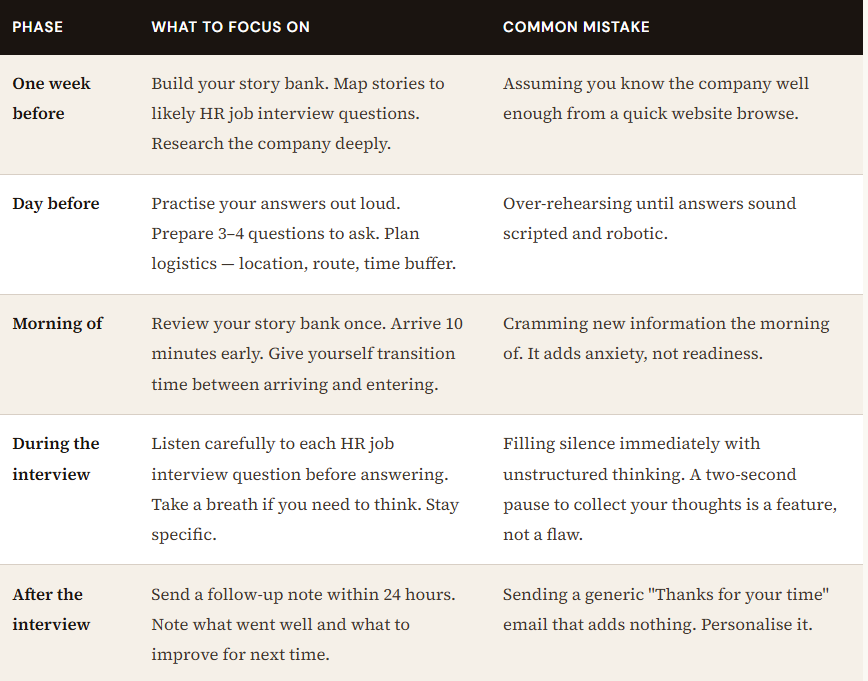
Before, During, and After: The Full Interview Timeline
Remote and Video Interviews: The Same Questions, Different Stage
The rise of remote hiring means that a significant portion of HR job interview questions and answers now happen over video. The questions are identical. But the environment introduces variables that an in-person interview does not.
Camera placement matters more than most people realise. A camera positioned at or just slightly above eye level creates natural, confident-looking eye contact. A laptop sitting flat on a table turns your face upward at an unflattering angle and makes you look like you are addressing the ceiling. Elevate the screen.
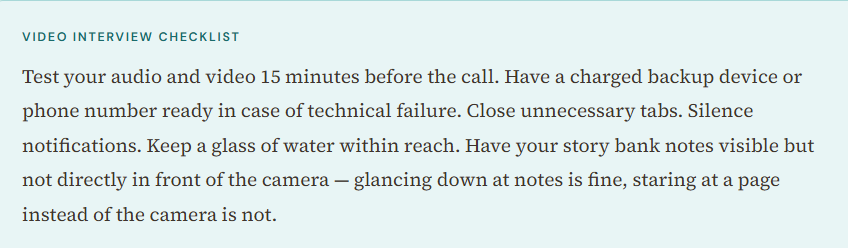
Background and lighting have become proxy signals for professionalism. A clean, uncluttered background and a light source in front of you (not behind, which creates silhouette) demonstrate that you have thought about how you present. It is a small thing, but every small thing either adds to or detracts from the overall impression formed during HR job interview questions.
Seven Mistakes That Sink Candidates in HR Interviews
Preparation for HR job interview questions is incomplete without understanding what goes wrong. These are the most common errors that cost candidates roles they were otherwise well-qualified for.
- Vague answers with no examples. “I am a team player” is not an answer. “In my last role, I coordinated four departments to hit a quarterly deadline ahead of schedule” is an answer. Always anchor to evidence.
- Criticising former employers. No matter how justified, speaking negatively about previous workplaces signals to the interviewer that they may be next in line for the same treatment.
- Not listening properly to the question asked. Many candidates start forming their answer before the question is finished, then answer something adjacent to what was actually asked. Listen to the end.
- Answering “Do you have any questions?” with “No.” This is one of the clearest signs of insufficient preparation and genuine disinterest. Always have questions ready.
- Overselling to the point of sounding implausible. There is a version of confidence that tips into arrogance, and interviewers notice it quickly. Claim what you can back up with evidence — not what sounds most impressive.
- Bringing up salary before the interviewer does. In a first HR interview especially, let the salary conversation be initiated by the company. Raising it too early can suggest that compensation is your primary motivation — even if it legitimately is.
- Forgetting that the interview goes both ways. The best candidates are evaluating the company just as the company is evaluating them. That posture — curious, discerning, professional — comes through and it is attractive to strong interviewers.
The Real Secret Behind Every Successful HR Interview
After going through every dimension of HR job interview questions and answers, there is one thing that ties it all together. The candidates who consistently perform well in HR interviews share one quality: they have done the internal work, not just the external preparation.
They have thought clearly about what they actually want from their career and why this particular role fits that. They are not performing interest — they feel it. They are not manufacturing enthusiasm — they have genuine reasons. And when the conversation becomes difficult or probing, they remain calm because they are not trying to maintain a persona. They are just being honest about their experience and their thinking.
All the preparation techniques for HR job interview questions — the story bank, the STAR method, the company research, the rehearsal — are in service of one thing: helping you communicate clearly and confidently the truth of who you are as a professional and what you can bring to this particular role. That is what every HR interviewer is actually looking for.
Not a perfect answer. A real one.
Apply For Job Now!